In all professional sports there is a salary cap. This is the amount of money teams are allotted to pay the players on the team. In 2019, the NFL raised the salary cap to $188.2 million, a 6.2% increase from 2018’s $177.2 million cap. Below is a chart comparing NFL team’s salary caps, as well as their carryover not spent from the previous year and cap room:
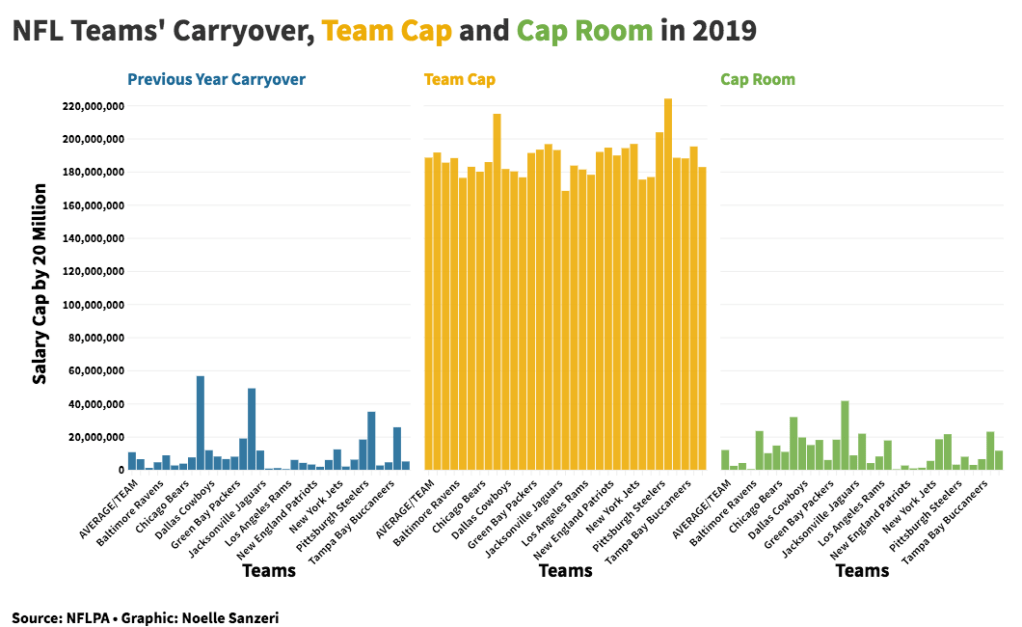
In the live chart, there is also the number of current contracts each team has. This means the Chicago Bears have 60 players to pay, in addition to having to guarantee a minimum salary to players for credited seasons. A player with 0 credited seasons minimum pay is $495,000. Ten or more credited seasons and the minimum pay surges to $1.3 million.
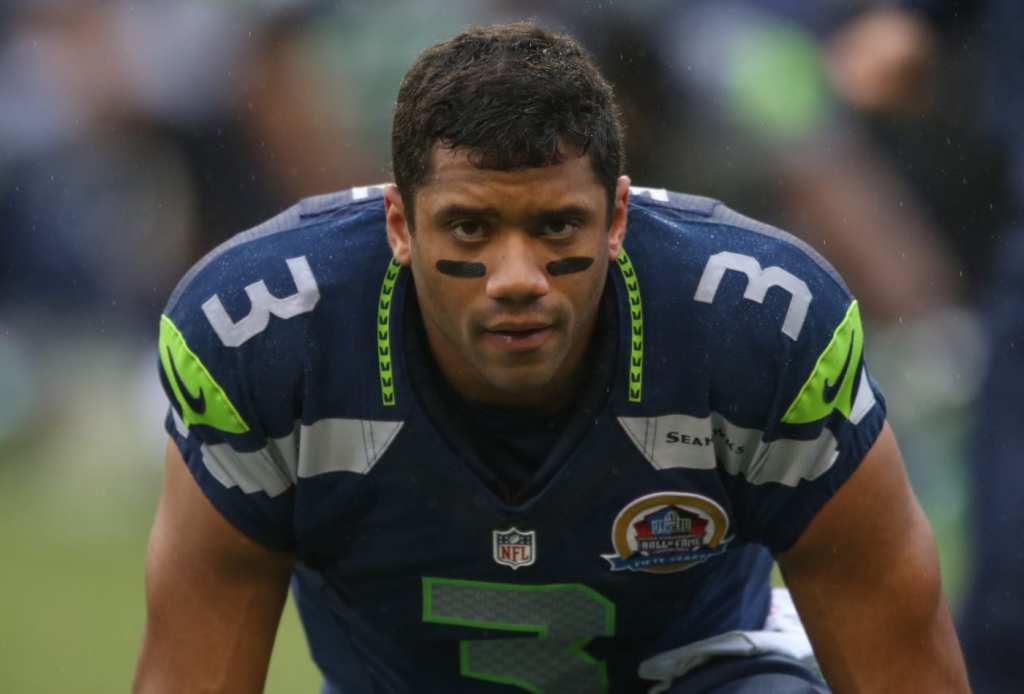
With players like Russell Wilson, coming in at #1 highest paid player in the NFL in 2019 making $79 million, and other members of the Seattle Seahawks making well over $1 million each year, how do the teams manage to pay their players more than the NFL’s cap? The answer is the team cap. Team cap is calculated by adding the salary cap to the carryover from the year before.
It is important to note dead money as well when looking at the NFL’s salary caps. This is money the team has already committed to paying or has paid in salaries, but is not charged against the salary cap. However, this amount will need to paid back or taken from the cap at some point. This brings in a key date in the NFL, June 1st. Teams can release high priced players, that might not have performed well and still comply with the cap rules.
Over the last six years, the NFL has continued to raise its salary cap due to revenue growth. In 2018, it was estimated that the total revenue was $15 billion. Even through continued controversies over the National Anthem, and viewership being down, the NFL is a money making machine, making sure players are being well compensated for their performance on the field.
 Noelle Sanzeri Data Journalism